




Posted:10-August-2026
Ethical Financing in the UK Franchise Market
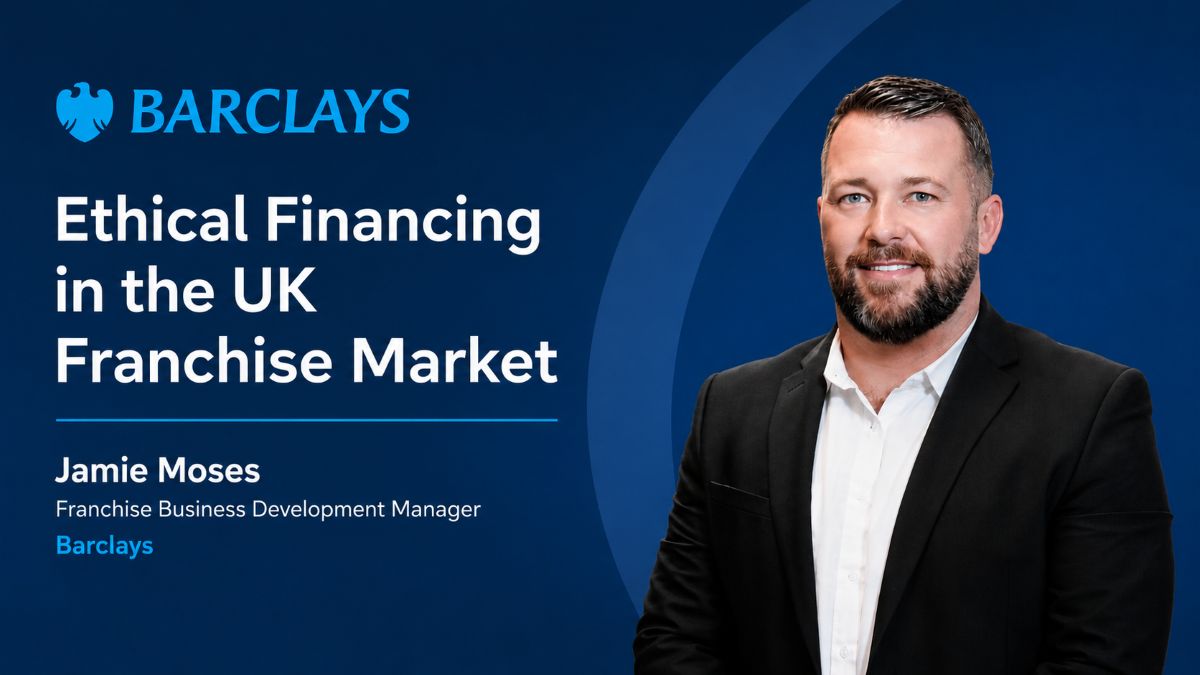
The UK franchise market offers a proven route to business ownership, combining established brands with scalable operating models. However, despite its strengths, franchise ownership carries inherent financial risks, particularly for first-time franchisees who are making significant capital commitments.
Against this backdrop, ethical financing is critical. It ensures that growth within the sector is not only achievable, but sustainable for both franchisees and lenders.
Why Ethical Financing Matters in Franchising
Franchise businesses benefit from brand recognition and structured systems, but this does not eliminate risk. Start-up costs can be substantial, often including franchise fees, fit-out expenses, working capital, and ongoing royalty commitments.
Without careful financial structuring, these costs can lead to:
- Over-leverage, where debt levels exceed the business’s ability to repay
- Cashflow pressure, particularly during the early trading phase
- Overly optimistic projections, driven by brand expectations rather than local realities
In addition, many franchisees are new to business ownership, increasing the risk of:
Misunderstanding financial obligations
- Underestimating operating costs
- Relying too heavily on borrowed funds
- From a broader market perspective, poor lending decisions can also result in:
- Higher default rates
- Strain on franchisor networks
- Reputational risk for lenders and the wider sector
This is why ethical financing is not simply about compliance, it is about ensuring that funding supports viable, sustainable businesses, rather than short-term growth.
Key Ethical Challenges in Franchise Lending
Several recurring challenges make ethical discipline essential in the franchise sector:
- Balancing Growth vs Affordability - There is often pressure to maximise lending to support expansion. However, excessive leverage can undermine long-term viability.
- Assessing First-Time Operators - Many franchisees lack direct business experience, making robust assessment of transferable skills and readiness critical.
- Reliance on Brand Strength - Strong brands can mask underlying site or operator risks. Ethical lending requires focusing on individual business performance, not just brand reputation.
- Forecast Uncertainty - Start-up projections may not fully reflect ramp-up periods or cost pressures, increasing the importance of conservative assumptions.
How Barclays Supports Ethical Franchise Financing
Barclays addresses these challenges through a structured, customer-focused approach, ensuring that funding decisions are aligned to both opportunity and sustainability.
- Barclays ensures that every facility is built around realistic affordability:
- Lending is aligned to cashflow capacity, not maximum borrowing potential
- Customers are expected to contribute meaningful equity, demonstrating commitment
- Repayment profiles are designed to reflect early-stage trading dynamics, including where appropriate capital repayment holidays
This approach helps prevent over-leverage and supports stable early growth.
Disciplined Risk Sharing
Barclays maintains clear principles around risk alignment:
- Personal guarantees and security are used where appropriate to reflect exposure
- Government-backed schemes are applied correctly, and not used to bypass standard risk considerations
- Lending structures are designed to ensure both bank and customer have a shared interest in success
Robust Customer and Brand Assessment
To ensure funding supports the right opportunities, Barclays undertakes detailed due diligence, including:
- Assessing management capability and transferable experience
- Reviewing franchisor strength, including training, support, and network performance
- Evaluating local market demand and site viability
- Challenging financial projections to ensure they are credible and achievable
- This ensures lending is directed towards businesses with a genuine platform for long-term success.
Transparent and Fair Customer Engagement
Barclays places strong emphasis on ensuring customers understand the commitments they are entering into. This includes:
- Providing clear, transparent information on pricing, terms, and obligations
- Ensuring customers can make informed financial decisions
- Following structured processes to reduce the risk of mis-selling or misunderstanding
- This is particularly important for first-time franchisees, where clarity is essential to long-term success.
Supporting Growth Beyond Day One
Barclays’ role does not end at funding. As franchisees develop, the bank continues to support them through:
- Access to further funding as they expand into multi-site operations
- Dedicated relationship managers with sector expertise
- Access to wider business support and sustainable finance solutions
- This ensures franchisees are supported not just at launch, but throughout their growth journey.
The UK franchise market presents significant opportunity, but also requires responsible participation from lenders. At Barclays, ethical financing is embedded in every stage of the process: from initial assessment through to ongoing customer support.
By focusing on:
- Sustainable lending structures
- Transparent customer engagement
- Rigorous risk assessment
Barclays supports franchisees in building businesses that are not only successful at launch, but positioned for long-term, sustainable growth.
Our role is not simply to fund businesses but to help ensure they succeed in a responsible and lasting way.
To find out more about franchise finance, contact Jamie on 07443168060 or email jamie.moses@barclays.com